45 Common Viva Questions and Why Examiners Actually Ask Each One
Every viva draws from the same six categories of question. Here are 45 common viva questions grouped by category, with the reasoning examiners bring to each one before they open their mouths.
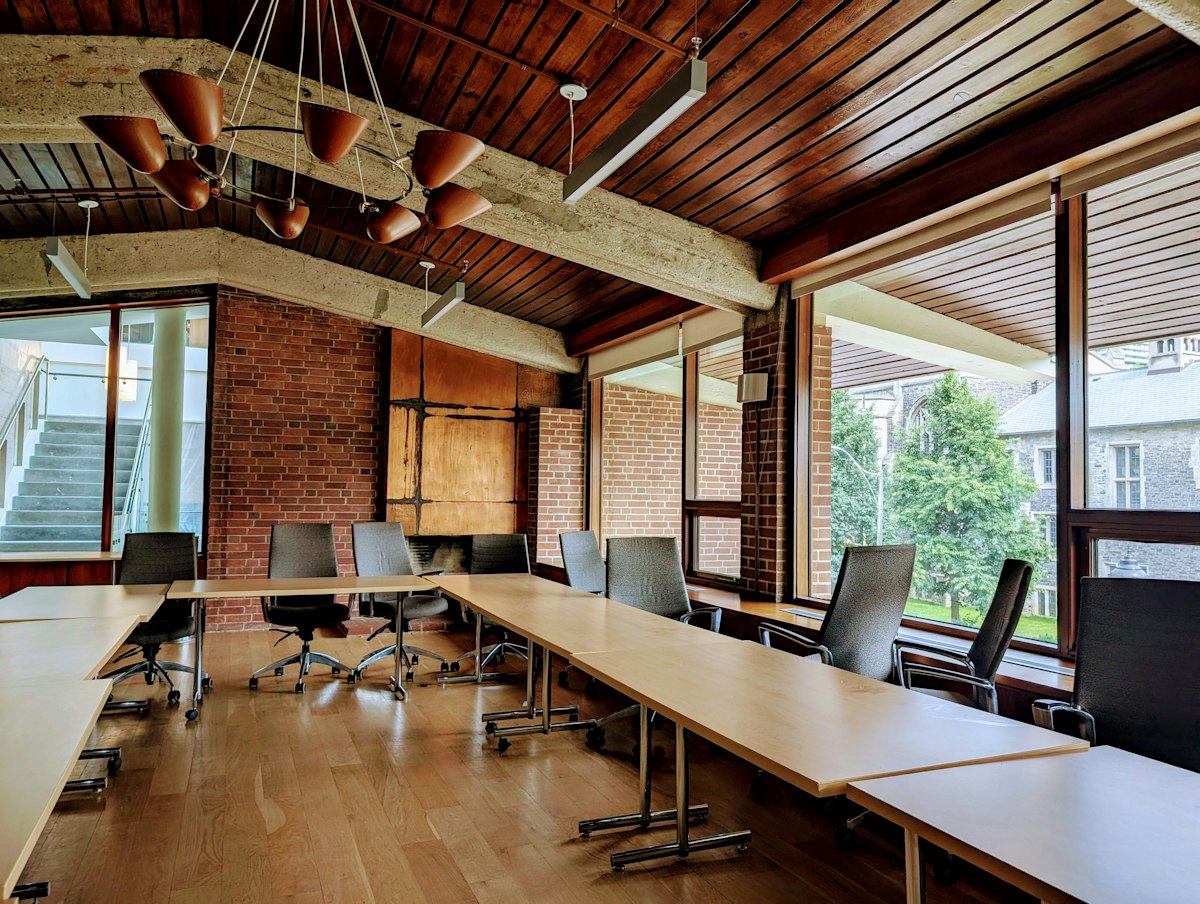
Every viva question comes from one of six seats
Lists of common viva questions circulate widely because doctoral candidates want to know what to expect. Most lists stop at the question. That leaves the reader memorising a script and walking in unprepared for the follow-up. Every question in a viva has a reason behind it. That reason is what the examiner is trying to establish, what they will do with your answer, and how they will press if the answer does not satisfy them.
This piece groups the 45 common viva questions into six categories, and gives you the reasoning examiners bring to each. That reasoning is what turns a rehearsed answer into a real one, because you can hear the shape of the follow-up before it arrives.
How examiners choose their questions
Jackson and Tinkler (2001) studied the purposes of the doctoral viva across UK institutions and identified three functions: examination, development, and a form of gatekeeping. Every question a panel asks serves at least one of the three. Some questions test whether you know your work. Some test whether you can extend it. Some test whether you can handle disagreement without losing your footing.
Mullins and Kiley (2002) added a further finding from their interviews with 30 experienced examiners: most panellists arrive with a small set of specific concerns drawn from the thesis, not a general checklist. They ask the questions the text has already prompted them to ask. That is why the same category shows up in every viva, but the exact question is different every time.
Category one: the opening (5 questions)
Openers set the tone and let the panel calibrate you. They are simple on the surface and revealing underneath. A candidate who cannot deliver a clean, one-minute account of the thesis in plain language is telling the panel something important before the substantive questions begin (Trafford & Leshem, 2008).
- What is your thesis about, in one sentence?
- Summarise your thesis in three minutes.
- What is the most important thing you learned during the PhD?
- Why did you choose this topic?
- What made you decide to pursue this doctorate?
The reasoning: the panel is testing whether you own the framing, whether you can compress without losing meaning, and whether the thesis has a spine you can articulate under mild pressure. The one-minute contribution answer is the anchor for the whole viva. If it lands, later questions become a discussion. If it wobbles, the panel starts probing.
Category two: contribution and originality (8 questions)
Every doctoral thesis must offer an original contribution to knowledge. The panel will find yours. What they want to establish is that you can name it, defend the size of the claim, and place it against work you did not do.
- What is your original contribution to knowledge?
- How is your work different from what is already published?
- Who will use your findings and why?
- What would you say is the most important chapter of your thesis?
- Which of your findings surprised you most?
- If a colleague asked you what your thesis adds, what would you say?
- What does your work make possible that was not possible before?
- Is your contribution theoretical, methodological, empirical, or a combination?
The reasoning: examiners are testing the shape of the claim. Small claims defended precisely land better than large claims defended vaguely. Trafford and Leshem (2008) call this "doctorateness," the set of features examiners look for that mark work as doctoral rather than merely competent. Overclaiming almost always draws follow-ups; understating leaves the impression there was less there than there is.
Category three: methodology (10 questions)
The methodology chapter is where most vivas spend the most time. Examiners open it early and read it slowly. Every choice you made is potentially a question, and the question is almost always "why not the alternative?"
- Why did you choose this methodology over the alternatives?
- What are the limitations of your chosen method?
- How did you select your sample?
- Why this sample size and not larger?
- How did you ensure validity and reliability?
- What ethical considerations shaped your design?
- How did you handle missing data?
- Would a different framework have produced different results?
- If you started again, what would you change methodologically?
- How does your method handle the counterexample of X?
The reasoning: a defended choice is a check; an implied choice is a challenge. Mullins and Kiley (2002) note that examiners repeatedly cite the methodology as the strongest signal of a candidate's maturity as a researcher. They are not looking for perfection. They are looking for evidence that you chose knowingly. A candidate who says "I picked this because it fit the question, and the trade-off was X" is answering the entire category in one sentence.
Category four: literature and citations (7 questions)
The literature review tells examiners what you know about the field and what you might have missed. Citation questions test the boundary between the two. Errors here are unusually damaging because they suggest that either the reading was not done, or the review was not written honestly (Park, 2003).
- How does your work relate to the existing literature?
- Which authors most influenced your approach?
- Is there any work in your bibliography you would now remove?
- Are there any important sources you did not cite?
- Why did you rely so heavily on this one author's framework?
- Has the field moved since you submitted for examination?
- How do you deal with the paper by [author] that challenges your position?
The reasoning: the panel is checking for accuracy and for currency. A misattributed citation is a red flag because it suggests the source was cited without being read. A fabricated citation is a full-stop problem. An audit by Topaz and colleagues (2026) in The Lancet found that one of every 277 papers indexed in PubMed in early 2026 contains a fabricated reference, up from one in 2,828 in 2023. A single such citation in your thesis, discovered by an examiner, changes the tenor of the whole discussion. Thesisroom's citation guard verifies every entry against Crossref, OpenAlex, Semantic Scholar, Retraction Watch, and DOAJ before you sit down.
Category five: findings and analysis (7 questions)
Findings questions test whether you know your own data. They quickly reveal candidates who wrote the results chapter without a working memory of the numbers, cases, or codes underneath it.
- Talk us through your most important finding.
- How confident are you in this result?
- Could your result have another explanation?
- How would this finding change if the sample were different?
- What does the analysis on page X actually show?
- Is there any counterexample in your data you did not report?
- What would falsify this finding?
The reasoning: examiners want to see that you can walk between the summary and the primary evidence without losing your footing. Trafford and Leshem's (2008) study of 25 doctoral vivas found that examiners return repeatedly to specific pages and figures, testing whether the candidate can recall not just the finding but its source. A candidate who can say "page 134, table 4.2, and here is why the effect is smaller in subgroup B" is answering the entire category.
Category six: limitations, future work, and beyond (8 questions)
The final block tests judgement. Every thesis has limits. Every thesis suggests further work. Candidates who deny limits fail the judgement test; candidates who volunteer limits before the panel names them pass it.
- What are the main limitations of your study?
- If you had another year, what would you do?
- How would you publish this work?
- What is the next study that should follow this one?
- How does your work apply outside the specific context you studied?
- What policy or practice implications does your work have?
- If your findings do not replicate, what would that tell you?
- Where does your work sit five years from now?
The reasoning: the panel is finishing on the questions Mullins and Kiley (2002) describe examiners caring about most: does this candidate think like a researcher beyond the immediate project? Owning limits early is not a confession; it is evidence of the judgement examiners are looking for. Wisker (2012) recommends volunteering the two most obvious limits in the answer to the opening question, so that the panel does not spend the middle of the viva excavating them.
Practical application: turn 45 questions into questions from your thesis
Reading a category list gets you to about 30% of ready. The other 70% comes from anchoring each generic question to specific passages in your own text. For every question above, write down the page in your thesis where the answer lives. If the answer is not on a page, either it needs to be written before submission, or it needs to be in your two-sentence justification file for the viva.
The next step is rehearsal. Read a passage aloud, then ask yourself the question the passage invites. If your answer wobbles, mark the page and come back to it. If your answer holds, move on. Do this for at least twenty passages spanning your chapters, prioritising the methodology and the findings.
Where Thesisroom fits
Thesisroom's mock viva coach reads your thesis or a single chapter, generates questions anchored to specific passages, and scores your answers on clarity, depth, and accuracy. The questions come from the six categories above, but each one carries a page reference: the passage that prompted it. Anchored practice is what the panel actually delivers, and it is what generic lists cannot.
The full method treats question generation as a whole-degree seat: chapter-level questions during the writing months, then thesis-level questions once the manuscript is complete.
Frequently asked questions
How many questions will I get in a viva?
Most doctoral vivas cover 15 to 30 substantive questions, though the exact number depends on how the conversation develops. Longer answers reduce the count; shorter ones extend it. UK vivas typically run 90 minutes to three hours; US defenses run about 90 minutes to two hours (Prospects, 2025).
Are viva questions the same across disciplines?
The six categories above are stable across disciplines. The specific questions inside each category shift: a qualitative sociologist will be asked about coding and reflexivity; a biochemist will be asked about controls and reagents. The reasoning behind the question categories is what stays constant.
Should I memorise answers to common viva questions?
No. Memorised answers sound memorised, and the follow-up question always breaks them. Prepare the reasoning and the page reference for each category instead. That gives you a real answer plus a defensible position when the panel pushes.
What is the hardest category to prepare for?
Methodology. Every choice you made is a candidate question, and the follow-up is almost always about the alternative you did not choose. Preparing means writing down, for each methodological decision, the two-sentence case for it and the two-sentence case against.
Can I bring notes to my viva?
In most systems, yes, you can bring a marked-up copy of the thesis and any brief notes you need to reach the right page. Panels expect this. What they do not expect is a candidate reading from prepared answers. Notes are for finding pages, not for reading paragraphs.
How do I practise with questions drawn from my own text?
The Mock Viva Coach reads the thesis and generates questions anchored to specific passages. Each question shows the page it came from, and the scoring is based on clarity, depth, and accuracy of the answer against the text. That is closer to what the panel does than any generic list.
One takeaway before you close this tab
Take the six categories above and build a single page for each. On that page: the two or three questions from the category most likely to apply to your thesis, the page in your text where the answer lives, and your two-sentence version of the answer. That page becomes your viva map. The Mock Viva Coach turns it into anchored practice against your own text, so the questions on the day are the ones you have already met.
References
Jackson, C., & Tinkler, P. (2001). Back to Basics: A consideration of the purposes of the PhD viva. Assessment & Evaluation in Higher Education, 26(4), 355-366.
Mullins, G., & Kiley, M. (2002). 'It's a PhD, not a Nobel Prize': How experienced examiners assess research theses. Studies in Higher Education, 27(4), 369-386.
Park, C. (2003). Levelling the Playing Field: Towards Best Practice in the Doctoral Viva. Higher Education Review, 36(1), 47-67.
Topaz, M., et al. (2026). Analysis of fabricated references in PubMed-indexed literature. The Lancet.
Trafford, V., & Leshem, S. (2008). Stepping Stones to Achieving your Doctorate: Focusing on Your Viva from the Start. Open University Press.
Wisker, G. (2012). The Good Supervisor (2nd ed.). Palgrave Macmillan.